I am a “Legal Aid Liaison,” which is a fancy way of saying I am a bureaucrat who deals in human debris. My office is located in an urban sprawl so grey and characterless it feels like a default setting for a city in some kind of tragic simulator game, except the people who come to my door are real. They are all too real. I deal with those who have had lives significantly harder than mine, and I feel a compulsion to act, to do something other than just sit and witness. I was born with certain privileges, and this job is my way of paying a tax on a soul I’m not even sure I will ever finish the down payments for. I am a professional witness, collecting these horrors because my own life is a void of frictionless privilege; I need the grit of their reality to feel like I’m not just an NPC in a suit.
The man sitting across from me was a special case. It was hard to look at him without your own body physically recoiling, a sympathetic ache in your own joints and skin. He sat in a chair that was held together by duct tape, his body a map of how a life can chew a person up and spit them out.
He was missing an arm. It wasn’t a clean, surgical stump. It was a jagged, scarred-over memory of a debt collection. He told me it happened in a squat where the furniture was mostly milk crates and mattresses that had long ago lost their spring. He had owed money to people who didn’t believe in payment plans. They used an angle grinder. He told me this with a voice that enabled you to hear the actual mechanics of his speech—a result of years of huffing toluene that had degreased the mucosal lining of his throat, leaving his larynx a scarred, rigid tube of gristle.
He’d been on a “three-day bender” of crack and heroin when the debt collectors came. He was in a state of chemically induced trance where the body is present but the pilot has left the cockpit. Because of the opiates, he could barely even scream when the blade hit the bone. He just felt a distant, high-frequency vibration and watched the spray of his own blood paint the peeling wallpaper.
His remaining hand was a testament to domestic horror. Someone in the squat had a dog, and he made friends with it. He’d passed out with a bag of beef jerky in his lap, and the mutt had gotten enthusiastic. Because the drugs had thinned his skin to the consistency of wet parchment, the dog’s playful tugging and licking of his hand had “degloved” the tissue from three of his fingers. He didn’t wake up until he had skeletal hands that required permanent dressings of greasy gauze.
Aside from his upper limbs, his face was a map of a collision. Nobody should be behind the wheel in such a state, but I think he felt that it was essential that he get away from wherever he’d been. His story doesn’t explain why he was driving, only that he was. So, he was just driving alone and of course, he swerved. He’s not sure why; he remembers seeing a person. But, his memory also sometimes puts a wild animal there. He’s quite sure it was probably all in his imagination. He has no idea what actually happened, but he swerved off the road for some hallucination. Some paranoid vision made his arm swerve to protect something that wasn’t even there and drove him straight into a utility pole. He had his seat belt on so he was OK, but when he hit that pole, the tempered glass shattered into fragments. Thousands of microscopic diamonds traveling at sixty miles per hour. They call it “starburst scarring.” The scars radiate outward from his nose in perfect, geometric lines, like he’s permanently frozen in the moment of impact. The wounds healed, freezing the motion across his face, giving the impression that he’s kind of flying through space. He looks like he’s constantly being viewed through a cracked lens.
Then there was the nose. Or the lack of it. A notch in the left nostril that made his breath whistle, and warped his face into a permanent, lopsided sneer. He’d passed out on a park bench during a cold winter. While he was out, a particularly officious squirrel had harvested a portion of his nose. “Disney-Gore from the world’s cutest omnivore,” he smirked, whether intentionally or not I don’t know, as he recounted waking up to that discovery.
When he spoke, you didn’t just hear the gravel; you heard the “Internal Scald”. Years ago, during a particularly deep overdose, he had aspirated his own stomach acid while unconscious, effectively performing a chemical peel on his own lungs. It had scarred the delicate alveoli into a rigid, non-compliant mesh, leaving him with forty percent of his original capacity. Every sentence was now interrupted by a wet, rhythmic click—a bellows-like gasp that sounded like someone trying to breathe through a handful of wet pebbles.
One of his legs was a purple, weeping column of edema that he called his “dead-weight”. It was the result of a fourteen-hour “node,” where he had collapsed in a slump on a cold concrete floor, his own body weight acting as a slow-motion hydraulic press. The lack of oxygen caused the muscle tissue in his thigh to die and liquefy inside the skin—a clinical disaster known as compartment syndrome. Doctors had eventually sliced the limb open to release the pressure, leaving a cavernous, jagged trench of scar tissue that looked like he’d been fed to a woodchipper and then stitched back together with wire. That’s why he rarely wore shorts.
His feet were a collection of missing pieces, a memory of a winter night spent in a metal dumpster. As his blood shunted inward to protect his liver, his extremities had frozen into crystalline structures. He recounted with a detached, clinical smirk how he’d woken up and tried to pull off his frozen socks, only to have three of his toes snap off with the clean, effortless sound of breaking frozen carrots. The blood only started to flow when the thaw came.
Finally, there were the “Collapsed Tunnels” of his torso. Because his arms had long ago been closed for business due to blown veins and the angle-grinder trauma, he had moved his habit to his femoral veins. Chronic cellulitis had turned his lower abdomen and groin into a topographical map of weeping, paper-thin skin that looked like it had been soaked in a bucket of indigo dye. He was a walking roadmap of infection, held together by a biological persistence that defied every law of human anatomy.
But the most pressing item in his inventory of misery was psychological, mainly spanning from his girlfriend. She was a fellow traveller in the wasteland of addiction, and she’d become pregnant. It was a collision of two broken people who still had working libidos. He was “almost certain” the baby was his. They were living in an abandoned tenement where the floorboards were swollen with damp and the only light came from the flickering streetlamp outside the cracked window.
She gave birth on a mattress that was more stain than fabric. She was so deep into a “nod” that she didn’t even realise she was in labour. The human body is a strange, resilient machine; it performed the task of expulsion while her mind was a thousand miles away, drifting in an opiated vacuum of happiness. She didn’t feel the transition. She didn’t hear the first wet cry of the child, who was already an addict as soon as she was born. She simply bled out into the grey foam of the mattress while the baby lay there, connected to a mother who had already become a corpse.
He woke up hours later to find a living child and a dead woman. At this point authorities were called and he made a rare conscious decision that he would turn his life around now. He took the baby. He wanted to be better. He wanted to “get right.” He went to the pharmaceutical company because he heard they were looking for “complex cases” for a new miracle drug. He went there with his one arm, his notched nose, and his gravel voice, looking for salvation.
They prescribed him Axiom-9.
The pharmaceutical headquarters was a cathedral of glass and white light, a jarring contrast to the grey urban hellscape where a man could lose his nose to a squirrel while dreaming of nothing. He walked in, a one-armed wreckage, carrying an 18-month-old child who was the only gravitational force for good in his orbit. Despite the jarring juxtaposition of worlds, this clean corporate clinic was looking for people exactly like him to test Axiom-9, the ultimate “Addiction Reset.” When he walked through the doors, the corporate scientists saw a Living Negative Asset, a baseline of human degradation that they could potentially move to zero.
Axiom-9 was marketed as a miracle that silenced the itch in the skull—that relentless, internal bone-scratching that addicts feel when the grey matter starts to turn black. But the clinical reality was a body-horror masterpiece. The drug functioned as a total neuromuscular interceptor. Sure, it killed the craving, but it also severed the wires between the motor cortex and the muscles. It turned the user into a “Passenger”. You are a hundred per cent awake, a ghost trapped in a meat-suit that looks like it’s in a peaceful, medicated slumber.
He had no idea what it actually did, but he was sent home with a maintenance supply, a series of pre-filled syringes that promised a life dictated by safety rather than addiction. He injected himself in his new apartment—a place the state was paying for him to live whilst he and his daughter got their lives back on track.
The paralysis took hold within seconds. He lay back on the mattress and he felt his breath become shallow and automatic. He was out cold to any external observer, essentially comatose. But inside, he was a man in a glass tank filled with ice-water. He was acutely aware of the dust motes dancing in the light, the hum of the refrigerator, and the tactile curiosity of his daughter.
Her Finnegan score had plummeted from the screaming ’20’ of her first week to a manageable baseline, but the Neonatal Abstinence Syndrome hadn’t vanished; it had just mutated into a permanent neurological static. She was eighteen months old and officially ‘stable,’ yet she remained a casualty of hypertonicity. Her nervous system didn’t recognize ‘gentle.’ It only understood the jerky, high-torque force of a body that had been forged in a chemical fire and then left to cool too quickly.
A toddler’s world is built on touch. She wanted her Papa to wake up. She started with soft slaps to his cheeks. After a while, her hunger set in. She needed her food, and her Papa. She needed stimulation. However, her brain was still a war zone of misfiring synapses. She lived in a state of permanent, vibrating agitation—a sensory hunger that no amount of milk or stories read in her Papa’s gravelly voice could sate.
Her muscles moved with a rigidity that turned her tiny hands into iron clamps. Her nervous system was a frayed wire. As her insistence grew stronger, he felt every sting as the slaps intensified, but his face remained a slack, serene mask. Then came the shaking, the pulling of his one remaining arm. The child grew frustrated, then focused. She sat on his chest, her weight a heavy pressure on his already-damaged lungs, and began to “investigate” the one thing that seemed to be watching her—his open, unblinking eyes.
She wasn’t playing; she was experiencing a tactile crisis, her brain demanding a sensory input to replace the chemical one that was missing. She reached for the eye with the desperate, jerky force of a body in autonomic overthrust.
He watched her tiny, uncoordinated fingers approach. He felt the soft, blunt pressure of her thumb against the left cornea. Because of the Axiom-9, his blink reflex was dead. He could not even flinch as she hooked her thumb into the soft tissue of the orbit. There was no sudden pop. It was a slow, wet extraction. The Ketamine-like disconnect of the drug meant his brain received the signals of agony, but had nowhere to send the reaction. He was a witness to his own mutilation.
He woke up in a sterile hospital ward days later. The socket was a crater, the eyelid healed into the bone like shrink-wrap. The girl was gone, taken into care because the state found a comatose father with a gouged-out eye and a house full of pharmaceutical wrappers. He realized then that the company had known about the “conscious paralysis.” They had suppressed the data to keep their stock price from bleeding.
He was no longer just a street casualty with an angle-grinder stump. He was the Living Proof of their betrayal, a man whose very visage was a lawsuit they couldn’t win. That’s why he came to me. I looked at his starburst face and his degloved fingers and I saw a hook—a way to make a corporation bleed for the mess they’d made.
The Aethel-Gard headquarters was a monument to the future—a soaring atrium of white marble and smart glass that tinted automatically to shield the executives from the harsh, unmedicated sun. I watched from a distance as he entered. He walked in looking like a Zero-Draft prototype of a human being that had been abandoned in a wind tunnel.
He walked past the security detail, who were too stunned by the sheer, jagged geometry of his face to stop him. He found a $5,000 Herman Miller chair in the centre of the Wellness Plaza and simply sat. He didn’t shout. He didn’t demand a lawyer. He just existed.
The contrast was a physical assault on the company’s brand. Against the sterile, high-end aesthetic, his body was a screaming neon sign of corporate failure. The missing arm, the scarred face, the notched nose, they would be counted alongside the eye-socket that looked like a thumbprint in wet clay. It was a visceral inventory of everything that drugs had allowed to happen, but Axiom-9 was arguably the most horrific of all. He sat there, his gravelly breath whistling through his nose-notch, until the air in the lobby felt thick with the smell of a PR disaster.
They took him to the Restoration Wing. It was a private medical vault where the air was filtered and the doctors wore silk. They performed a full-body audit. They scanned the starburst scars from his windshield impact and the indigo columns of his dead-leg calves.
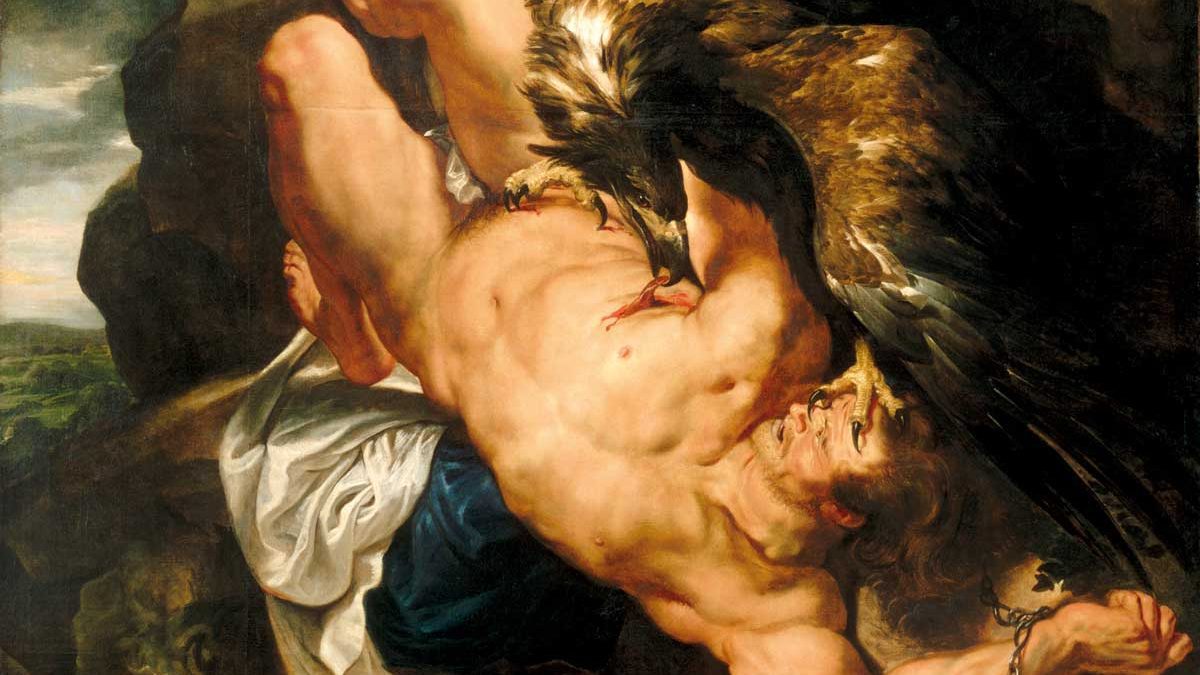
But the discovery was in the bloodwork. The Axiom-9 had interacted with his street history in a way the labs had never predicted. His liver was actually quite healthy. Despite the toluene, the solvents, and the years of “shake and bake” meth, his liver was actually thriving. They called it a Prometheus. It was a hyper-regenerative engine of chemical filtration. He had told me that he never touched alcohol because he saw what it did to his own father. He was a biological miracle, a Living Negative Asset that had somehow turned into a proprietary secret.
The lawyers arrived with a “Hush-Agreement” that read like a coronation. I negotiated it. I traded his right to exist in the sun for a 70-inch screen and a view of the city that had chewed him up. They had run the maths and realized it would be cheaper for them to keep him, even though the Prometheus Liver meant he might live for another seventy years. Every day he spent on the street was a day their stock price was at risk.
They bought him. They ingested him into their system of care and silence.
He ended up in a penthouse that costs more than the city block where he lost his arm. It is a gilded cage of glass oblivion. He is “saved”. He has 24-hour concierge service and a view of the sunset that looks like a painting. He spends his days tracking the movement of birds in the distance, and watching nature documentaries on a 70-inch screen, though he keeps the remote close to kill the feed if anything with a twitching nose or a bushy tail appears.
I managed to get him one thing the corporate lawyers tried to bury: supervised visitation. It’s rare, and it’s clinical, but she comes. She’s older now, a quiet girl who looks at his “starburst” face with a confused, distant empathy, not remembering the night she touched the world of his vision’s orbit with a drug-spasmed thumb.
When she isn’t there, he writes to her. He uses a heavy, black-lacquered fountain pen with a 14k gold nib. Another corporate peace offering designed to keep his skeleton fingers occupied. He presses the thick, embossed stationery against the jagged stump of his missing arm, using the scarred limb to pin the paper to the desk so it cannot slide away while he works.
He watches the nib touch the page, fascinated by the capillary action as the obsidian ink pulls through the feed. It’s a familiar physics; the way the dark fluid is drawn into the grain of the paper reminds him of the way the blood used to bloom in a disposable syringe when he finally hit a vein. The ink flows in expensive, permanent lines, a sharp, clinical contrast to the waxy, degloved texture of his grip, though even this is healing now —the skin tightening over his knuckles like burnished Nappa leather, sealing the damage in. He tells her about the birds on the balcony. He tells her he can’t wait to see her.
He doesn’t need the street drugs anymore, but the agreement mandates a maintenance dose of the new, refined Axiom-10. When he’s not writing to his daughter he writes testimonials for it, though we have no idea if it works or not, really. He sits there, a passenger in a luxury cabin, his gravelly voice a secret the world will never hear. He is a success story. He is off the streets, and for the first time in his life, he is finally, perfectly, clean.
Author’s Note
I didn’t set out to write a story that is worse than Chuck Palahniuk’s “Guts” (which I read years ago on my lunch break when I worked in a bar. I was eating minestrone soup and I just laughed and went home and had a wank). The impetus for this story came from a pencil-written note I found in my gaming diary, of all places. No date, but probably circa 2020, deep lockdown times. The note just reads “The Disfigured Man —Crack/Smackhead with 1 1/2 yr-old kid in a trance like drug state but kid awake. Starts off slapping his face but ends up sticking thumb in one of his eyes + gouging it out. The guy gets lots of other disfigurements uglier he is uglier his life vicious circle + no turn back“
Yeah, that’s the kind of shit I write notes to myself about. My friend, Richard, who always reads my stuff (big shout out to that guy! You know who you are, buddy!) said to me “Man, that’s dark😂. I’d ask how on earth does your brain go in that direction? But I think art is just like that, hey?”
The story developed into the legal aid liaison/Prometheus parody just naturally as I tried to wrap a narrative around it. IMHO the ending is one of my nicer endings really. He gets a gold pen and I was laughing my arse off when I wrote how he tells his daughter he can’t wait to “see” her again. Geddit! LMFAO. Yea yea yea, fuck off it wasn’t meant to be funny anyway, just wry.
Why Prometheus I hear you say? Well, I wanted to show that I think with my dick and it has a brain on it. That’s pretty much all, just some literary flex. In truth I think it works well. Hope you enjoyed and thanks for reading you psychos.
